Tuesday, June 24, 2014

Year in Review

Hi Everyone. I finished my first City Year!

It turns out that blogging during my first year of service was more than I could handle. Luckily, "posts or it didn't happen" isn't how the world works. 10 months just happened. My first year out of college just happened. In my 5 posts of 2013, I probably captured less than one percent of all the incredible little joys, questions, struggles, triumphs, disappointments, and seeds that were planted, harvested, experienced in my first year of service.

In 12 days, I am going to start my second year of service with City Year. I want to do better than I did last year when it comes to documentation. I think that an important part of this work is sharing it with you. You and I are part of one very large community which is working to make the world a better place. The more that we can learn from one anothers' wisdom and experience, the better a job we'll be able to do. And so I willingly embrace the challenge (round two) of capturing elements of my year and sharing them via this blog.

So, a quick recap.

Flagship Service 2013
Last year I was a corps member. I was one of 10 team members, guided by a Team Leader (TL) and overseen by a Program Manager (PM), who worked one-on-one with students in the classrooms every day to help City Year fulfill their mission of keeping kids in-school and on-track. Here are some pictures from that time:

Welcome to the City Year Room!

(way cooler than Ellen's) #oscars
My team. These are some of the most wonderful and hard-working people I know. 

Two of my teammates having fun with the "Cherian Method", an innovative and time-saving way of prepping locker decorations for application. (Yes, we were all very excited to have found a better way to put (academic) decorations on lockers). 


Much of our work happens in the form of small-group tutoring interventions. This is an especially small group, and we are spending time going over the day's English lesson to help make sure that the girls really understand what is going on. 

In the days leading up to the DC CAS, a brightly colored sign greets students as they come up the stairs in the morning. The CAS is the high-stakes standardized test used to measure, among other things, teacher and corps-member impact on student learning.

City Year teams start and end each day with a Strong Circle and a Spirit Break- a circle where we can all see one another, share announcements, and prepare for (or debrief from) a day of service . The spirit break pictured is a flu-season edition- we didn't want to get each other sick! 
All I want is for our students to be able to believe this about themselves, and to be able to actually do it, especially when we are not there.


Student Service Week 2014
Last year, I also had the unique opportunity to serve as the executive director for an alternative spring break camp for local high school students. Do you want to know what happens when you put a very diverse group of urban and suburban high school students together for a week of workshops, community service, and discussion all oriented around urban social justice issues? Magic happens. 

Below is an excerpt from the email I sent to my site after the week was over. 

"Students started their week with discussions of identity and of the different approaches that service can take to alleviating suffering. Monday ended with a student simulation of a town striving for prosperity despite an unfair system of class preferences. On Tuesday students interacted with different facets of poverty, hunger, homelessness, and incarceration. They deployed to service cleaning homes for the elderly, preparing meals for the hungry, building furniture for a shelter, and corresponding with juvenile inmates. On Wednesday students learned about urban environments, touching on food deserts, play deserts, and the relationship between DC’s waste and the Chesapeake Bay. Their service included Anacostia River cleanup, urban farming, and guerilla gardening. On Thursday, students explored healthy relationships on all levels from intimate partnerships to intergroup dynamics. Their service on this day included work with womens’ shelters, anti-bullying initiatives, the #ThereIsMoreToMe campaign, HIPS, and MetroTeen AIDS. On Friday, students participated in a final service project, reflected on the day, and created partnerships that would allow them to continue their service beyond the week of SSW. On Friday they also celebrated their success through a touching graduation ceremony.

Ultimately, the students are the ones who can best speak to their experiences:
     ·“This week has been a major eye-opener for me. I love the conversations we had and loved helping the community." --Alayshia
     ·  “At first I just came here because I needed more service hours but now I'm a little sad to leave. Thinking about joining City Year. It was amazing!” –Kayla
     · “I had way too much fun for such an educational experience.” –Sarah
     · “CYDC, thank you for revitalizing my passion to save the world!”  -Tremayne

The energy and optimism radiating from our students at the end of the week was palpable. Students developed personally, felt solidarity with a larger service community, and were empowered to leverage their time and resources to #makebetterhappen. I am grateful to have gotten to play a part in such a special week. 

Dig Deep, Rise up, and Break Through,
Kami

Planning and delivering this program, called Student Service Week, was one of the most challenging and rewarding things I've ever done. From the logistical side to the leadership development side, the lessons and reverberations of the experience will stick with me for a long time. 

Here are a couple of pictures from Student Service Week 2014:

Students and CY volunteers after a human rights workshop. 

These students had to tolerate aggressive cops, discriminatory real estate agents, and  unresponsive banks as they struggled to succeed in a simulation activity which tasked them with "building a prosperous community".  In this picture, they are attempting to cope with the highway that was just built, which cuts their neighborhood in two. 

Student responses to a warm-up activity asking them, "how do you think the world sees you?" Our whole week was geared towards empowering students to learn from their own observations, to make connections between the personal and the political, and to take action to make the world a better place. The biggest thing that we wanted to teach them was how to think critically about social justice
Final circle on the final day of spring break. I can't really describe what it felt like to have so many of my flagship team members there by my side, doing a rockin' job, during our spring break program, so "awesome" will have to suffice. On this day, they took inspiration from the week's theme ("The rose that grew from concrete") and gave me three dozen roses to celebrate the culmination of our hard work! 
Coming up next....
In two weeks I am going to start my second year of service! I'm going to be a Team Leader, guiding a group of first years through the experiences that I had last year, and helping them to be the most powerful agents of change that they can be. None of them know anything about City Year culture yet. My seventh graders will be eighth graders, applying to specialty high schools. I am going to have to manage data and coach people. It's going to be a phenomenal year. I look forward to sharing the nitty gritty (as well as the big picture inspirational) aspects of this work with you via the blog. Stay tuned!

Yours,
Kami


Saturday, November 30, 2013

Jomi Rocks Service

To make up for the prolonged silence, I bring you a heartwarming story that literally has made my week. It's longer than usual, so that you have more to enjoy.
The Backstory

Here’s this boy, we’ll call him Jomi. Jomi is one of the students on my behavior focus list. This means that he and a small group of children have lunch with me once a week- we play fun games and discuss topics like empathy and teamwork. We tell the students it’s “leadership development” (which it most definitely is) but it’s also (mostly) behavior coaching. Many of my students are assigned to lunch clubs because their discipline record warrants the intervention. Jomi ended up in my group in a slightly different manner.

He had been bothering me from day one be added to my lunch clubs. In the cafeteria, in the halls, during class, I found ways to deflect his request. “I’m sorry, I can’t”, “I’m not accepting more students at this time”, and, “I wish I could, but my boss is the one who makes these decisions.”  Finally hearing something he can work with, Jomi backs off only to return the next day. “I’m in your groups! Your boss says you gotta.”

“Oh yeah?” I ask, “You talked to him? What’s he look like?”

Missing only a beat, Jomi says: “he tall. And he uh… has a haircut!” I was amused but skeptical. My supervisor confirmed via text that Jomi had not spoken to him. By the end of that week, Jomi had indeed made the acquaintance of my boss and approached him about being added to my groups.  

Getting tired of my own refusal, I began to consider it more seriously. Jomi had trouble focusing in class, and could definitely use some behavior coaching. Plus, here was a boy who actually seemed to want to do the work for lunch clubs. Who could resist? The next time he asked me if he could join, I asked him a question right back.

“Why do you want to be in my lunch clubs?”

“Because…it seems fun”

“I’m glad it seems fun. But we meet for more than just having fun. We talk about developing as leaders, and about improving our behavior in class”

“Oh.”

“So, is there any other reason you want to do lunch clubs?”

“Leadership development…to be a better person!”. He gives me a winning smile. I give him a winning challenge- to behave his very best in my class for the next week. If he can do this, he will have earned a place in my lunch groups.

Jomi rose to the challenge. A boy who the week before had been rambunctious and focused almost exclusively on his friends was suddenly diligent and quiet, facing the correct direction in the classroom, and overall very focused on learning.

I was surprised and impressed (and very aware that his degree of self control is rare among my students, so many of whom want to behave but don’t seem to know how). Jomi joins my lunch club and quickly becomes one of the students I most look forward to working with. He is easily distracted if there are any other over-energized children in the group, but he’s phenomenal one-on-one. Calm, honest, and very funny.

50 Acts of Leadership

Within City Year lunch clubs, one of our incentive programs is called 50 Acts of Leadership. The idea is this: students perform acts of leadership of increasing impressiveness as the year goes on. They must record every act to get credit (by describing the act, why they did it, and who it helped). The goal is that they complete 50 Acts by the end of the year, and we have a big celebration for all the students. In the meantime, the students are hopefully reflecting on their choices and slowly becoming model leaders - getting suspended less and getting on the path to success more and more.

50 Acts of Leadership might not sound like much…but I promise you, it’s a very ambitious goal. There are all sorts of barriers to student success: Losing their paper is a big issue. As is thinking about leadership any moment that we’re not directly prompting them on it. Some of my teammates have yet to receive a single act of leadership from their students. I have taken to filling it out with my student during lunch club time, hoping that this initial effort will keep them invested in the long 7 days between meetings. Often, students are suspended between meetings and so don’t meet with the group for several weeks at a time.  

Anyways, I’ve recently been making a renewed attempt at successful completion of the acts of leadership. Because I’m desperate for them to succeed. I decided that instead of imposing an incentive program on them, we would create one together.

So Jomi and I sit down to brainstorm what his reward should be for completing 5 or 10 acts (because at that point, I think he had 3). “A whole bag of candy!” he said, his eyes lighting up. I concede him a bag of candy for performing 10 acts of leadership. For 5 acts, we agree on a drawing lesson. I have a lion drawn on the cover of my binder and the students are fascinated with the idea that I drew this lion myself, and that they might be able to learn to draw it too.

I introduce to Jomi important standard of “increasing impressiveness”. If one of his first acts of leadership is to hold the door open for his whole class, then his next acts should be more impressive. This is, after all, supposed to challenge him to grow into a better person. He seems to grasp this quickly, and begins to suggest more impressive things he could do. All the dishes for his mom. His homework for a week. Community service.

This last suggestion really captures my attention. Almost jokingly, I tell him, “Jomi, if you do community service outside of school hours, I’ll give you credit for 10 acts of leadership.”  In my mind, I imagined him working his way up to community service sometime in the spring, when trees were beginning to bloom and the DC dirt was thawing.

You wouldn’t believe- that boy came back the very next Monday talking about how he did volunteer work over the weekend. Only half believing him, I told him to write it on his leadership log and get his mother to sign it.

He did, and she did. Here is a picture of what he wrote.
"I volenteered for community service for two whole hours in the freezing cold. So when I first got their I got my volenteer vest and got started. Community service is very hard work. I saw all types of trash I saw CD's, cups, I even saw a dead frog. So community service is kind of fun."
You cannot believe my shock and excitement as we spent all of Friday’s lunch club discussing his weekend service. I told him how proud I was of him, and grateful that he is in my lunch clubs. “Oh yeah” he said victoriously, pumping his fist in the air.

I don't know why it surprised me so much. Maybe because I was oblivious to community service at that age, that I'm stunned when other little people aren't. Maybe because it was remarkably organized and mature of a child who can't ever seem to become mentally present enough to turn in homework every week. Maybe because I couldn't picture the students who receive my community service also doing community service for others. Maybe because it seemed like my actions and challenge to him had actually impacted the world.

No matter the reason, Jomi's actions and commitment to the City Year lunch club program were inspiring to me. His actions also reminded me of how vibrant and alive and creative my kids are. Of how important it is that I never box them in with too-low expectations. Of how important and uplifting it is for me, as a mentor/tutor/coach, to see my students succeed. Of how proud I feel of them. Of how frustrated I am that they are spending much of their time clowning around, fighting, or avoiding class work instead of applying themselves in the hopes of a better future. Of how much I am going to miss them when the year ends.

* * *

Thanks for your patience during my multi-month immersion in the City Year experience! Sometimes, I'm so busy trying to do a good job and learn about my new community that I forget how to include other people in that process. But I want to! And so I'm gonna try to do better in the coming weeks and months. This Thanksgiving break imposed some sort of calm on my life, and so hopefully that'll help me bridge the gap from living my experiences to reflecting (publicly) on them.

Stay tuned, keep rockin' your lives!


Monday, September 23, 2013

Growing Pains


This year is going to be full of 'new'. 'New' is the fertilizer for personal growth. 'New' tends also to be very, very uncomfortable.

I'm going to tell you a story. Here’s what was floating around in my mind before that story transpires. The shootings at Navy Yard a few weeks ago. The shootings at the mall in Nairobi this weekend. The 2 weeks of lessons wherein I explained repeatedly to my students the general scope and impact of the Holocaust, to which they had been oblivious prior to my intervention. My ongoing reading of The Book Thief. A 14-year-old former student of Ms. Dana’s, caught in crossfire and shot dead while hanging out on a friend’s porch. Netflix exposure to Orange is the New Black, and to Scandal. The disclosure from my team leader that there has been a violent neighborhood incident towards a City Year every year we’ve been at our Middle School.


Little did I realize, these images, themes, crises, people and characters were all floating around in my mind, shaping the lenses of my experience.

* * *
On the day in question,I was riding the metro home at around 6:35pm. About 23 minutes into my 60-minute ride, a young man gets on the train. He begins to speak to us, and because all the commuters are employees heading home after a long day, he doesn’t have to work hard to get our attention- the car is already silent. He’s got no flair, no game, and no hint of street performance. He speaks calmly.

“Everybody listen up!

I’m sorry to bother you today. My name is so-and-so and I could use some help.”

At this point, I look up from my book and replace my glasses cautiously on the bridge of my nose. I look him over. He is black. He looks like any of my students but a decade older.


“I have a family,” he continues, “but not enough money to take care of them.” I currently find myself homeless. Today I am asking you for help- for anything you can give. I will also be giving you something here today.”


(I interrupt my story to add a few more details. Every since I was a child, I have had a disturbing habit of picturing massacres and disasters. I blame this habit on my active imagination circa the time when I learned about the Holocaust, no later than 4th grade. These visions of massacre never seized me more powerfully than when I was going to synagogue with my family or attending some other gathering of Jews).


After pausing (ominously) for a few moments, the young man continues:
“Like I said, I have a little something for you”


In that moment, a million toxic thoughts clouded my mind. 

He has a gun.
Hostage situation.
He’s reached his limits and there’s nothing to stop him from shooting us.
The world has been unfair to him, and we're bearing his vengance.
What he has for us is a whole lot of violence. The world is violent- it’s about time my privilege stopped buying me the illusion of safety. I’m stuck on a metro car with a killer.


He looked around. I sat motionless, caught between my initial compassion and blossoming horror.


And what did he do then?


Nothing violent, and something entirely harmless. He sang us a song.
His voice was beautiful but not exceptional. The song was exactly the right mix of bluesy and lovely and sad. I listened with my heart in my throat.


I fished a few dollars out of my bag. I wondered who else would give money- would prove to me and to this gentleman that kindness exists even in the hearts of wearied commuters. When he was finished, he didn’t walk around. He just said thank you and sortof ambled to the the other end of the train. People gave money.


I was honestly too preoccupied with my own imagined death to want very much to follow the young man down the train car. Shaken, I put my dollars and my book away, and eventually I slept.


* * *
All overactive imaginations aside, I think that this is an important story.


This story is important because it touches on issues of race, and of class, and of privilege and vulnerability. It represents one of those exceptional moments where the ways that I’m thinking are easier to see, to explore.  I’m pretty sure that it’s a story of me being racist. I’m pretty sure that I’m more comfortable sharing that via blog than I would be via person. I’m also pretty sure that the story has many layers- layers that have to do with the narratives we’re fed about young black men, poor blacks, and urban people of color; layers that have to to with my feelings of vulnerability and hypervigilance whenever I’m out alone in the city; layers that have to do with systemic poverty and my own complicated relationship to financial privilege; and layers that have simply to do with how much control we ever really have over the tragedies and fortunes that befall us.


For a few moments on the train, I was acutely uncomfortable. When I walk the 15 mins from the metro to my school site, I’m vigilant of my surroundings. Working in a school that’s 99% black and 99% low-income has its moments of discomfort. Talking about race and class and personal experiences can be very uncomfortable. But it’s something that I want to do. I want to do it for my own sake, for the sake of the diverse world we live in, and for the sake of all the people I’m going to have the pleasure of meeting once those reflections feel a little bit less new.


Clumsy, agonizing, discomfort. Much like puberty, these are the costs of growth. If I’m a little bit uncomfortable, at least I know I’m challenging myself. That i’m experiencing something I’m not quite equipped to handle. That I’m going to come out of it a little wiser- a little more attuned to an issue of existence that had escaped me before. Even though I’m gonna feel a little bit miserable and a little bit exhilarated along the way.


Discomfort is the feeling of growth. I was (very) uncomfortable on the train that day, and I’m sure that the young man was too. We were each in a situation somewhat foreign to us- no one is born to be begged at, no one is born to beg. Writing this blog post is my way of taking a few cautious steps towards understanding what I felt and why I felt it.

The road is long, uncomfortable, and very rewarding. When you're on the journey, you're not quite sure you're gonna make it. And you keep going anyways. Those roads- metaphorical or actual- definitely make for the richest lives and the best adventures .

[Photo Cred: EJK 2013]

Wednesday, September 18, 2013

My Life as a Corps Member (Part 1)

My life as a Corps Member (Part 1) Placement: 7th Grade English/Language Arts with Ms. Dana.
3.5 weeks into the school year


I am at school each morning by 7:30. Students arrive by 8:45, and before 8:30 if they want breakfast. Kids roll into the building in a burgundy haze, streaming through the metal detectors, passing their backpacks to security guards (all women), and waiting in either the gym or the cafeteria until they are released for class. During this time I’m doing classroom prep with my partner teacher, knocking out group work with my City Year teammates, or roaming the school looking for an open bathroom. Sometimes I hang out with my students, and their reactions to my presence among them range from excitement to apathy to actively fleeing my presence. I’m fine with all of these options. The other day someone came up and zipped my backpack for me as it hung open, and then ran off with just a little half smile on his face. It was sweet.

At 8:45, my students are rounded up and marched, single file, up to the seventh grade floor. They are then given three minutes to get to class. Bags are stuffed into lockers, renegade papers are caught and shoved into binders, candies and chocolate bars are tucked surreptitiously into pockets- reserves to liven up the mid-morning slump. From the chaos of lockers slamming, students chatting, and teachers counting down the minutes, some order emerges.

Lines of students, like patient ducks, along the wall outside of each classroom door. No scrambling or fidgeting, just a bored sort of patience as they wait to be admitted to class by their first period teacher.

I walk down the line outside Ms. Dana’s classroom- greeting students, checking in, and reminding them of expectations.
“Good morning Kyra, how are you doing this morning?”
“Ben, did you bring your homework today? Yes? High five!”
“Tuck your shirt in, John”
“Don’t touch her hair please, thank you”
“Girl I’m good, thank you for asking. The real question is how are YOU?”
“Maya, did you find some extra folders like we talked about?”
“You excited to learn today? Yes? It’s gonna be great!”
etc.

I stand by the door and greet each of my students as they come in.  Responses vary. Scowls. Blank stares. A quick nod of the head. Eyebrows way up. Goofy faces. High fives. Sometimes, the most enthusiastic students get their greetings out to me before I get mine to them “Hi Ms. G!”

Throughout the day, this routine is repeated four times, once with each of the teams as they dutifully arrive to improve their reading skills- phonics, comprehension, vocabulary, etc. As a general rule, mornings are pretty tame and afternoons are pretty raucous. Twelve years old can look like a calm and collected maturity or like an almost psychotic inability to focus or take direction. Brooding silence and unpredictable bouts of openness and curiosity. The diversity of dispositions is interesting, but also part of what has made the last few weeks exhausting.

My students are every shade of brown and everywhere on the spectrum of physical development. Their uniform requirements have them all in burgundy collared shirts tucked smartly into khaki pants.  No flashy makeup or distracting accessories allowed. Despite the “no individuality” imperative from the administration, my students’ self-expression comes out through their shoes and through their hair. I haven’t seen the same pair of shoes or hairstyles twice.

The strict attitudes at my school reflect our administration’s commitment to improving the quality of our education. Where only 3 students from this middle school got accepted to specialty DC high schools three years ago, the total was up to 8 two years ago and up to 54 last year. This is inspiring, but a rigorous pace to maintain. There has been an intense focus on standardized testing (assessments every 2 weeks) and on making sure that no lesson is planned which does not connect to one of the core standards for the grade and subject matter. Although the rigid structure and severe discipline regimen is not intuitively appealing, I’m excited to experience it firsthand for the duration of the year.

That being said, I make an effort to ensure that more positive affirmation than corrections come out of my mouth, and that students respect my authority without associating me with the yelling of most of our teachers (Someone's gotta be the enforcer, but thankfully that's not my primary role in the school.)

My days are long and there are so many interesting and stimulating things going on There’s so much more to share, but I didn’t want to postpone a post any longer. I promise I’ll write again soon. Happy (almost) solstice!

Thursday, August 29, 2013

My Life is My Message


Labor day is this coming Monday and that means a 3-day weekend! It’s been a whirlwind week, and I’m looking forward to debriefing and recharging with some sleep and some fun stuff. 

A podcast I quite enjoy has a habit of opening with some commentary on recent news stories. I appreciate that this often clues me in to important stories that I would otherwise miss. I'm paying the habit forward, and so here are some thematically relevant links before the discussion of Life as Message . 

The theme? Labor.
photo by: klg

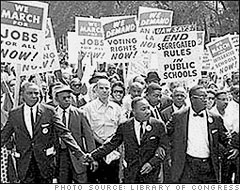
1) In honor of the 50th Anniversary of the March on Washington (and in honor of themselves), people strike across the country, still marching for jobs and freedom. How are we helping them?

2) DC wants large retailers to pay their employees more than minimum wage! Wal Mart threatens to not open any stores in DC at all. The story, here.


Now, onto
the rest of the blogging:


Today after school, we went to City Year headquarters in Dupont Circle to pick up some more pieces of our uniform. The highlight of this package? Our red jackets. (The red jackets are the most iconic piece of our uniform- a recognizable symbol of our commitment to the students in our schools, and to national service). Seeing myself in that jacket (in the mirror in the bathroom down the hall) stirred up feelings of pride and responsibility. By accepting the jacket, I was validating and affirming the fact that I am ready to give this year of my life to the boys and girls in my classes, to the city of Washington DC, and to myself as an activist and an empathizer.  


photo source: city year
I was a whole ball of emotions.


Feeling the need for some self care, I bough some frozen yogurt and went for a walk. My walk led me to a statue of Mahatma Gandhi on Massachusetts Ave. 

Written on the base of this statue were a bunch of words, and one quote in particular stood out to me: 


“My life is my message”

City Year encourages us to think in visionary ways. We are young, we have a vision, and we are committed. What we do isn’t magic, it’s a labor of love. I am about to live the next year of my life in service. I’m about to spend a year testing the realities of what so many of us are encouraged to do: to spend time giving to our communities instead of just giving to ourselves. 

But it’s hard work, and hard to keep in focus. Most of my own wants and needs are just so much more visible than the wants and needs of “communities”. The world’s problems are enormous and complex, and although my problems feel complex too, it’s a safe bet that most of them will be resolvable if I have enough money- at least as far as autonomy and nutrition and health are concerned. And if not with money, then with the right music, or ice cream, or a game of frisbee barefoot on the grass.
photo by: klg

What would it mean to live as though my life is my message? For my life to be something more than the sum of my daily choices? Gandhi’s quote encourages the reader to engage with their lives not as passive observers of a product, but as active creators and guides. If I have a sense of what message I want the world to receive from me, I suddenly take ownership of my life as the vehicle for communicating it. There’s a long term goal and a guiding structure that wasn’t there when my life was just My Life, and not also My Message.

Gandhi’s message is frightening. Who am I to think that my life is worthy of delivering a message? What if the message my life communicates is a bad one? This is scary because I don’t think a lot of people live like this...what if there’s a reason they don’t?! Could I be happy living other ways? Can I compromise, Gandhi? Can my personal life be my message, and my professional life be how I maintain some stability? What if I flip that, devoting myself to a humanity-affirming career but relaxing those standards around my friends and family?

Gandhi’s message is empowering. The mere fact that I should spend time and energy thinking about the message of my life means that my life’s message is important. It means that I am important, and that I can spend time thinking about visionary things like this. My message, because I invest time and energy into it, will become important in my eyes (and therefore important in the lives of the friends, family members, and others who observe me). I can make a difference. Even if I only make it 1% of the way to truly living a life that reflects my ideals- that’s a little bit more beauty and kindness in the world than would have existed if the quote (and the challenge contained in it) hadn’t crossed my path.

What do you think of Gandhi’s quote? Mostly a healthy challenge? An empty ideal? Is it inclusive and relevant to people of diverse life circumstances (class, gender, race, abilities, etc?). Is it just sap? Is it wonderful? What about people whose messages aren't something we want to hear?

Thanks for visiting,
-KLG